

Meet your tireless coworker who never asks for coffee or PTO. AI Agents are software workers that plan tasks, take actions, and report back. They don’t just answer questions; they execute multi-step workflows across your tools. Think “smart teammate,” not “smarter chatbot.” They schedule posts, draft emails, update CRMs, and trigger next steps without nudging.
For small businesses, that’s a big unlock. Time is tight, budgets tighter, and execution speed now decides who gets found first. Agents cut busywork, publish faster, triage leads at 2 a.m., and spin up landing pages while you sleep. You get consistent output, fewer dropped balls, and, bonus, no awkward small talk in the break room.
What Exactly Is An AI Agent? 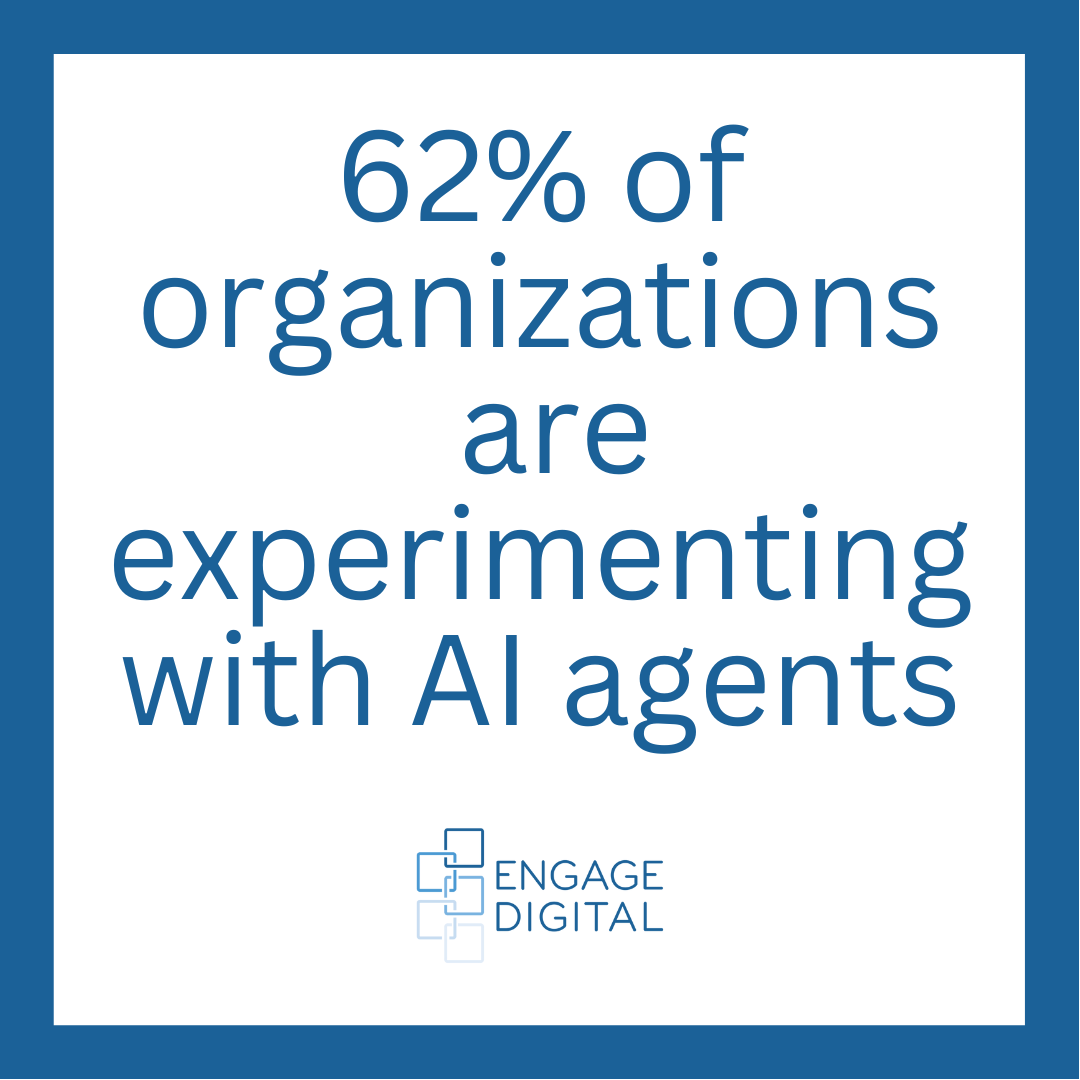
Unlike a basic chatbot, an AI Agent can set goals, choose steps, and use apps. It files tickets, drafts emails, updates CRMs, and launches campaigns. Crucially, it learns from results. So, performance improves with each loop. And yes, you keep humans in the driver’s seat. But the agent handles the wheel on straightaways.
Importantly, adoption isn’t fringe anymore. In McKinsey’s 2025 global survey, 62% of organizations are experimenting with AI agents and 23% are already scaling them in at least one function.
Why This Matters Now (Not Next Year)
Search behavior changed. Social feeds reward video and velocity. Buyers expect instant, personalized responses. Therefore, the old “batch and blast” model lags. AI Agents compress cycle time from idea to impact. Moreover, they make small teams feel large. They don’t replace strategy; they multiply it.
Meanwhile, the enterprise world is moving. Gartner notes service leaders are already redesigning customer operations around agentic AI, with rising automation across channels and “machine customer” interactions on the horizon. That means expectations will only climb.
High-Leverage Marketing Jobs Agents Can Do
Most teams start by asking what agents cannot do. A better question is which tasks create leverage. Here are high-impact, low drama jobs agents can own while your marketers focus on strategy.
1) Produce And Localize Landing Pages At Scale
Agents turn one approved copy block into dozens of variations: by city, industry, offer, and pain point. Then they insert schema, compress images, and hand you a QA list. They also translate, generate UTMs, spin A/B variants, and flag local compliance notes, so your team publishes faster with fewer misses.
2) Ship Short-Form Video From Existing Content
Agents can script 30–60-second clips from a blog, add captions, and create thumbnails. Then they tag files and draft platform-specific descriptions. They auto-size to 9:16 or 1:1, pull on-brand B-roll, schedule posts, and generate subtitles, so you meet today’s feed preferences without adding headcount.
3) Manage Social Listening And Replies
Agents can script 30–60-second clips from a blog, add captions, and create thumbnails. Then they tag files and draft platform-specific descriptions. They auto-size to 9:16 or 1:1, pull on-brand B-roll, schedule posts, and generate subtitles, so you meet today’s feed preferences without adding headcount.
4) Refresh And Repurpose Evergreen Posts
Agents update stats, swap outdated screenshots, and surface internal links worth adding. They expand FAQs, tighten metadata, refresh dates, and propose embed-worthy charts or clips, so winners stay current and keep compounding.
5) Orchestrate Campaigns Across Tools
Agents move briefs from Docs to project boards, set deadlines, create ad sets, and request approvals. They connect CRM and email, build UTMs, pace budgets, spot anomalies, and deliver next-step summaries, then they post, collect results, and summarize what to try next.
The Payoff: Time, Consistency, And Measurable Lift
Finally, momentum. McKinsey finds high performers rewire workflows, not just bolt AI on top. They redesign processes and scale faster than peers. That mindset shift is what turns “pilot” into profit.
Overcoming The Hesitation (Totally Normal)
You might worry about tone, accuracy, or brand risk. Sensible. So, implement guardrails:
-
Start with low-risk workflows (drafts, outlines, QA checks).
-
Require human approval on public posts and ads.
-
Log every action for auditability.
-
Track agent win-rates and failure modes.
Additionally, begin with one high-value lane. For many SMBs, that’s landing-page generation or social repurposing. Then expand as trust and results grow. Crucially, define “done” precisely. Agents thrive on crisp definitions and structured templates.
A Simple Rollout Plan For Small Teams
Weeks 1–2: Pick The Right Use Case
Choose a workflow with clear inputs, repeatable steps, and measurable output. Map tools, permissions, and success criteria. Then write your “golden” examples.
Weeks 3–4: Pilot With Tight Loops
Let the agent run daily. Review output against your rubric. Tweak prompts, fields, and edge-case rules. Measure cycle time, error rate, and throughput.
Weeks 5–6: Scale And Safeguard
Connect more data, add more templates, and expand to a second workflow. Add approval queues, change logs, and alerts. Document the playbook.
Week 7+: Optimize For Compounding Value
Schedule refresh tasks. Build content clusters around winners. Add short-form video to each new page. Tie results to revenue, not just reach.
Agent + Human: The New Marketing Stack
The future is collaborative. Humans set strategy, voice, and brand guardrails. Agents execute, analyze, and iterate. Meanwhile, platforms are racing to make this standard. Gartner’s 2025 research highlights a rapid shift to agentic service operations and new interaction patterns that elevate automation. Translation: your customers will expect faster, smarter responses across the journey. Equip agents with clear templates, approval queues, audit logs, and escalation rules so quality stays high while speed increases.
Similarly, cross-industry data shows organizations are moving from curiosity to scale. With 62% testing agents and nearly a quarter already scaling, the window for early advantage is now, not later. Pair human judgment with agent throughput, measure against SLAs, and expand to adjacent workflows once win rates stabilize.
Bottom Line: Start Small, Learn Fast, Scale What Works
Yes, caution is wise. But delay is costly. Competitors are cutting cycle times, flooding channels with better content, and learning faster. Therefore, pick one agent use case and get moving. Then measure, refine, and expand. Run a 4–6 week pilot with crisp KPIs, turnaround time, cost per asset, and QA error rate. Keep humans in the loop, ship in a sandbox, and document playbooks. Use a simple rule: kill what stalls, double down on winners. Because the businesses that ship with agents today will own tomorrow’s momentum.