
Let’s level with each other. The algorithms did not send a holiday card, a thank you note, or even a sympathy text, they just got smarter, faster, and far less patient. Buyers now expect clarity immediately, platforms reward relevance instantly, and brands that hesitate feel it quickly.
Marketing teams are leaner, budgets are scrutinized, and leadership expects proof, not promises. Every channel is judged on contribution, not activity. What worked last year is no longer guaranteed to work this year. Execution gaps are punished faster than ever. The good news is simple. Brands that adapt now will ride a powerful tailwind in 2026.
AI Everywhere, Useful On Purpose
AI is no longer a shiny experiment or side tool. It is infrastructure. Content drafting, asset preparation, QA, analytics summaries, forecasting, attribution modeling, and media operations all benefit from AI assistance. What matters now is not access to tools, but how deeply they are embedded in everyday decision-making. For small businesses, this means AI becomes a force multiplier, allowing lean teams to operate with the speed and sophistication of much larger organizations.
Marketers who wire AI into daily workflows move faster, reduce friction, and learn continuously. AI helps prioritize tasks, spot performance issues earlier, and reduce manual work that slows growth. Global digital ad spend is approaching one trillion dollars annually, and growth continues as budgets follow efficiency, speed, and measurable impact. Teams that operationalize AI well capture more of that spend because they respond faster to signals, personalize at scale, surface insights earlier, and waste fewer cycles across planning and execution.
Short Video Keeps The Crown
Short-form video still rules the feeds across nearly every platform. Audiences expect fast, clear, and useful content that earns attention within seconds. Formats continue to evolve, but the core behavior remains the same. Video is where discovery happens and where first impressions are formed. For small businesses, this is an advantage. Short video rewards clarity and relevance more than production polish, making it easier to compete without massive budgets.
YouTube continues gaining share of social ad budgets as marketers prioritize high intent watch time, consistent reach, and stronger brand safety controls. Shorts accelerate channel growth when paired with long-form anchors that build authority and trust. Instagram remains effective for discovery, retargeting, and creator partnerships, especially for service-based brands. TikTok still delivers reach, but brands increasingly expect clearer revenue contribution, stronger attribution, and repeatable performance, not just viral moments.
AI Video Goes From Nice To Needed
AI video tools make consistent output realistic for small and mid-sized teams. Quick explainers, product walk-throughs, localized clips, customer education, and internal enablement content no longer require a studio, large crews, or extended timelines. This shift removes one of the biggest historical barriers to regular video production. For small businesses, it levels the playing field, allowing them to compete on visibility and clarity without enterprise budgets or long approval cycles.
Marketers consistently report video as a top driver of ROI, lead quality, and time on site. Video answers questions faster, builds trust earlier, and reduces friction before a sales conversation ever begins. Combined with rising social ad investment, faster content cycles, and shrinking attention spans, video becomes the backbone of modern campaigns. It supports awareness, education, and conversion across channels, especially when paired with paid distribution. It is not optional. It is foundational.
UGC Meets UGI
User-generated content remains powerful because it feels authentic, relatable, and grounded in real experience. Audiences trust people more than polish, especially when evaluating products or services that affect their time or money. This makes UGC a natural fit for modern feeds, where credibility is earned quickly, and skepticism is high.
Add useful generated input from your brand, partners, and employees to scale it responsibly. Film short “how we fix it” demos, honest pricing explanations, behind-the-scenes processes, and before-and-after sequences. This mix often outperforms polished commercials because it feels helpful, not salesy. It also reduces production costs while increasing relevance. Build a monthly capture rhythm. Two hours of filming can yield one long-form asset and five to ten short clips. You do not need Hollywood. You do need intention and consistency.
Websites Still Matter, Just Differently
Your website remains the source of truth, but discovery often starts elsewhere. Buyers arrive with context formed by platforms, reviews, and AI summaries, not blank slates. That shift changes what your site must do and how quickly it must do it. In 2025, more than 70% of buyers reported researching a company online before ever making contact, raising the stakes for clarity and credibility the moment they arrive.
YouTube, Instagram, LinkedIn, and AI-driven search summaries carry more influence early in the journey. Treat your site like a conversion engine and a clean source for machines to understand and reference. Publish fast pages, clear schema, realistic pricing ranges, and updated FAQs. Structure content so AI systems can summarize it accurately and confidently. If a model can parse it cleanly, a buyer can trust it quickly, and trust now precedes conversion more often than persuasion.
Expect More Zero-Click Journeys
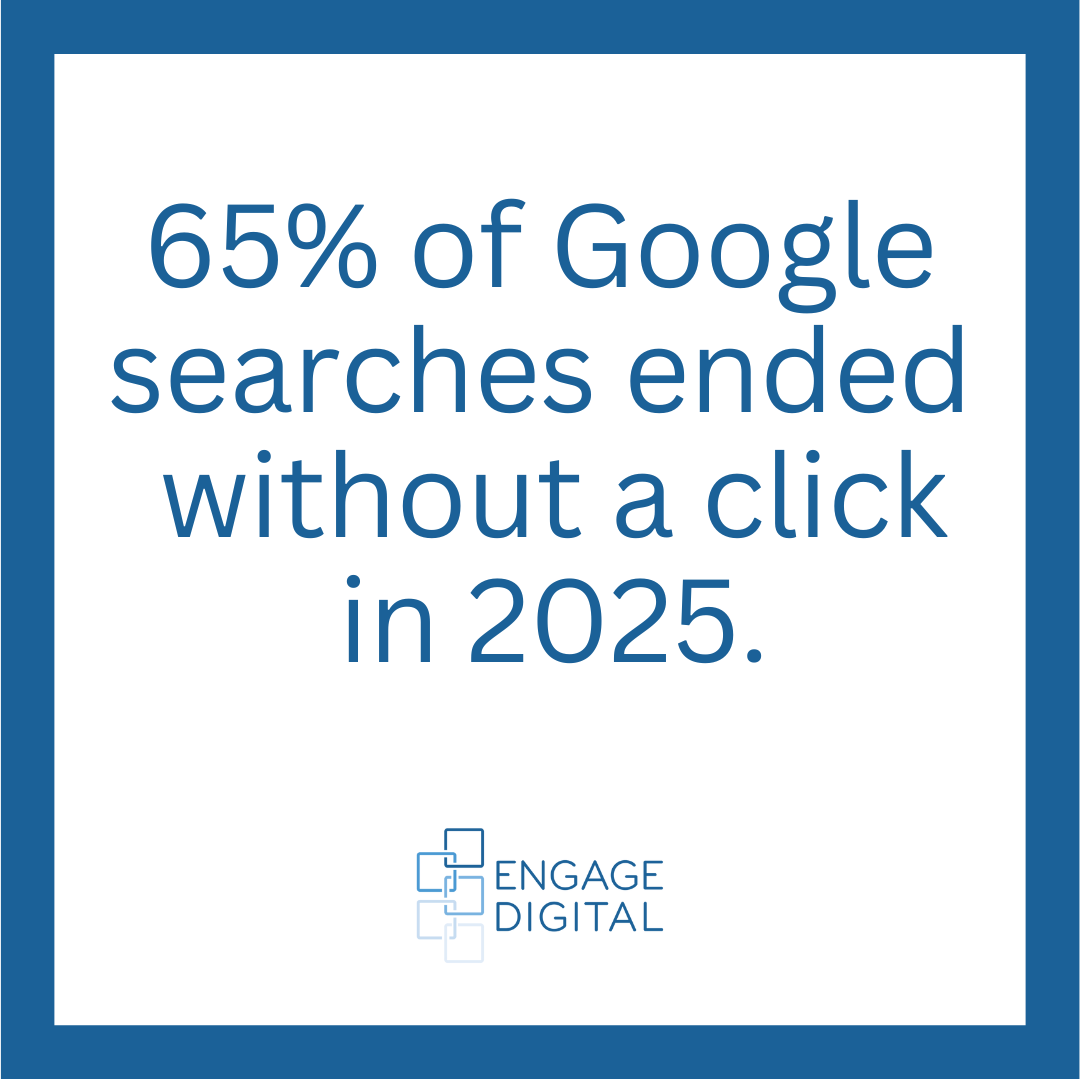 AI summaries and rich search results reduce traditional clicks while increasing overall visibility. Buyers often get answers without leaving the results page, which changes how value is captured. Impressions, citations, brand recall, and authority signals now matter alongside visits, especially for early-stage consideration and research-driven decisions. In 2025, 65% of Google searches ended without a click, and this number could exceed 80% in 2026, reinforcing how often brands are evaluated without a visit ever happening.
This shift forces a mindset change for marketing teams. The response is not panic. The response is better packaging for answers, stronger hooks for the clicks you still earn, clearer brand signals within summaries, and more video to win attention directly inside feeds and platforms. Content must earn trust quickly and communicate value without requiring a visit. Success increasingly depends on being understood and remembered, not just clicked.
Platform Budgets Rise
Social ad spend continues climbing worldwide, now well over two hundred billion dollars annually. As more buying journeys start on platforms, paid media plays a larger role in discovery, education, and conversion. Algorithmic feeds prioritize consistency and relevance, making sustained investment more important than sporadic bursts. Organic reach alone rarely carries the load anymore. Global social advertising spend exceeded $230 billion in 2025, underscoring how central platforms have become to demand generation and growth.
Marketers chase reliable reach, cleaner measurement, and faster feedback loops. For smaller firms, outsourcing paid media often makes sense. You gain specialized expertise without adding full-time headcount or internal complexity. Set a healthy monthly budget, define goals by channel, and treat creative as the primary growth lever. Strong creative compounds result faster than targeting tweaks alone, especially when testing and iteration happen weekly.
Data, Clean And Connected
AI is only as good as your data plumbing and governance. Without shared definitions and consistent signals, even the best models produce noise. Many teams discover this only after investing heavily in tools that fail to deliver clear answers and create more confusion than clarity. Clean inputs determine whether AI accelerates progress or amplifies existing problems.
Surveys consistently show fragmented systems weaken AI outcomes, slow decision-making, and erode reporting trust. If your CRM, analytics, commerce, and support tools do not share context, you will move more slowly than competitors who fixed this early. Consolidate platforms where possible, standardize tracking, and name events clearly. Your AI tools produce better insights, and your human analysts spend less time reconciling spreadsheets and debating numbers across teams.
What To Invest In Right Now
- Short video system. Batch record monthly. Edit into Shorts and Reels. Prioritize YouTube and Instagram, then distribute elsewhere.
- AI in the loop. Use AI to draft, version, tag, QA, and repurpose content. Use it to summarize analytics and flag anomalies early.
- Website that converts. Faster pages, clearer CTAs, pricing clarity, and structured FAQs built for humans and machines.
- Platform native content. Publish where the audience lives. Link out only when intent is high and friction is low.
- Search for AI. Add schema, definitions, and answer blocks. Make content easy to cite in summaries.
- Paid media discipline. Test creative weekly. Shift budget quickly toward winners and pause laggards.
Team Shape For 2026
- You do not need a massive department to compete. You need clarity and accountability.
- One strategist who sets priorities, defines offers, and aligns channels to outcomes.
- One creator who can shoot, edit, and deliver short videos consistently.
- One performance specialist who owns ads, attribution, and reporting.
- AI agents to draft, tag, resize, transcribe, summarize, and repurpose on repeat.
What About TikTok
Short form still works there, especially for discovery and awareness. The platform remains influential in shaping trends and culture, and for some audiences, it plays a role at the top of the funnel. However, attention does not automatically translate into action. In 2025, more than 60% of marketers reported that TikTok underperformed Instagram for driving direct revenue, highlighting the persistent gap between views and measurable business outcomes.
Many brands rebalance toward YouTube and Instagram unless TikTok proves stronger revenue efficiency and downstream performance. Follow your audience behavior and cost per desired action, not headlines or hype cycles. If TikTok drives measurable outcomes, keep it active and test deliberately. If not, reallocate without hesitation or guilt, and prioritize platforms where attention converts more reliably into revenue.
Budget Reality
Plan for higher digital allocation overall. Digital now carries responsibility across awareness, demand, and conversion, not just lead generation. As more journeys unfold on platforms, underfunding digital creates gaps that other channels cannot easily fill or recover later. In 2025, digital accounted for roughly 72% of total ad spend growth worldwide, signaling where competitive pressure is concentrating and where brands must compete to stay visible.
Forecasts continue to show brands shifting spend toward measurable digital channels and away from harder-to-track tactics. Budget for video production, stable monthly paid media, and a lean tooling stack that saves real time. U.S. digital ad spend surpassed $300 billion in 2025, reinforcing the need for disciplined planning and continued increases in 2026. Underinvesting in creative limits performance, no matter how advanced targeting, automation, or AI systems become, especially in competitive categories.
The 2026 Playbook In One Breath
Produce short video weekly. Turn blogs into clips. Show pricing ranges early. Speed up the site. Build AI into production and analysis. Place ads where buyers actually watch and engage. Measure outcomes, not vanity metrics. Speak plainly. Document what works. Share learnings across teams. Cut what does not perform. Improve continuously, even when results are strong.
And yes, still drink coffee. The algorithms respect a well caffeinated marketer. At least that is our working theory.