Key Takeaways
- Your "what" is the outcome your marketing has to produce. Not posts, not clicks. A result you can count in the business.
- Your "why" is the reason a buyer picks you over everyone else. If you can't say it in one sentence, your marketing can't either.
- Changing tactics every quarter and reading reports full of activity are signs that one or both answers are missing.
- More spend alone won't fix it. Research forged into a real strategy with results as the goal will.
I've sat across the table from a lot of business owners over the years in my tech and marketing career, and one question I ask early tells me almost everything. "What are you trying to accomplish with your marketing?"
Most people give me a simple answer. Sell more widgets. I don't let them stop there, because the answer is always deeper than that.
In order for marketing to sell more widgets, it first has to increase the exposure of your widget. It has to build value in what your widget does. It has to have an answer to the problem that people who buy widgets have. And it has to get in front of them with a solution that is impactful and shows clear value.
Then I ask the follow-up questions: "Why should someone buy your widget instead of the one down the street? What makes your widget different? How is your company unique from your competitors?" And I keep going, digging into every detail of what actually sets them apart. That's usually when the room gets quiet.
That quiet is where most marketing budgets go to die.
The Problem Isn't Effort
The owners I talk to aren't lazy. They're working hard, they're spending real money, and a lot of them are frustrated. They feel like they've tried everything. In a lot of cases, they have.
But trying everything is the problem. When you don't know what your marketing is supposed to produce, every new tactic looks like it might be the answer. So you try the next one. Then the next one. And the budget gets spread across a dozen things, none of them pointed at anything in particular.
You can't aim at a target you never named.
Question One: Know Your What
Your what is the outcome. The specific thing your marketing has to make happen in the business.
Not "more awareness." Not "get our name out there." Those aren't outcomes, they're hopes. An outcome is something you can count when it shows up: booked appointments, qualified leads, repeat orders, new members, signed contracts.
There are many whats in a marketing campaign. The target what might be increased revenue, sales, leads or calls. But in between are many other whats, like driving people to a specific landing page with a specific message that can be tested and improved, all driving to the main what. All of them are important and part of the main what.
Once you know your what, you can judge every dollar against it. Did this campaign bring in booked appointments, or did it bring in likes? Those are very different things, and only one of them pays your staff.
Without a what, everything looks like progress. A report shows impressions went up, so it feels like it's working. But a task getting done doesn't mean it moved the business. The same goes for every new tool, AI included. AI isn't the value, what and how you point it is.
Question Two: Know Your Why
Your why is the reason a buyer picks you over the other options they have, including doing nothing at all. That's different from the reason you think you're great.
This one is often more difficult, and it's the one people skip most. Owners tend to answer it from the inside. "We care more." "We have great service." "We've been around a long time." Your competitors think and say the exact same thing about themselves, so it doesn't separate you from anyone.
A real why comes from the buyer's side of the table. What problem were they trying to solve when they found you? What almost made them go somewhere else? What did they tell a friend after they hired you?
When you know that, your message gets simple. You stop trying to say everything and start saying the one thing that actually makes someone pick up the phone and ultimately choose your company.
Signs You're Missing One (Or Both)
You don't need a consultant to tell you whether you have this figured out. Look at how your marketing behaves.
Your Tactics Change Every Quarter
New channel, new agency, new idea from a podcast. If the plan keeps changing, it's usually because nobody agreed on what the plan was supposed to accomplish. A clear what gives a strategy time to work. Without one, you give up before anything has a chance to work.
Your Reports Show Activity, Not Outcomes
If the monthly report is full of posts published, emails sent, impressions and clicks, and there's nothing in there about customers or revenue, that tells you what your marketing is actually built to do. It's built to look busy. That isn't always the agency's fault. If nobody defined the what, the activity is misaligned, yet it's the only thing left to report.
Sometimes the misalignment starts inside the company. Leadership often, without meaning to, pushes its agency or marketing team into activities, or changes tactics and strategy midstream, in ways that pull the work away from the outcome it was built to drive. When leadership controls or changes the execution, it changes the results.
Your Message Sounds Like Everyone Else's
Pull up your homepage and two competitors' homepages. Cover the logos. If you can't tell which message is yours, you don't have a why yet. Or you have one and it never made it into your marketing.
You Can't Explain Why Something Worked
Sometimes things do work, and nobody knows why. That's luck, not strategy. You can't repeat luck, and you can't scale it.
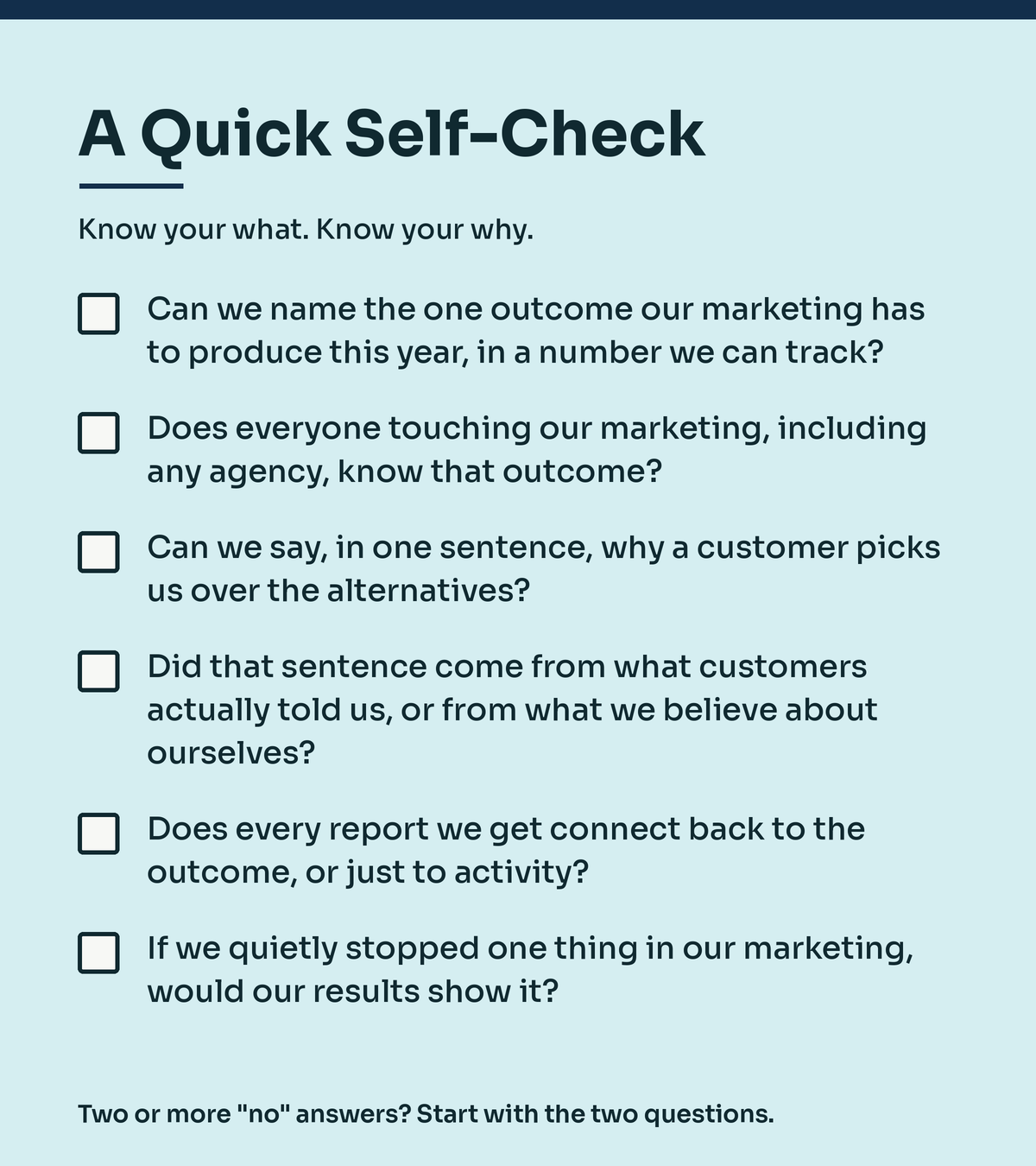
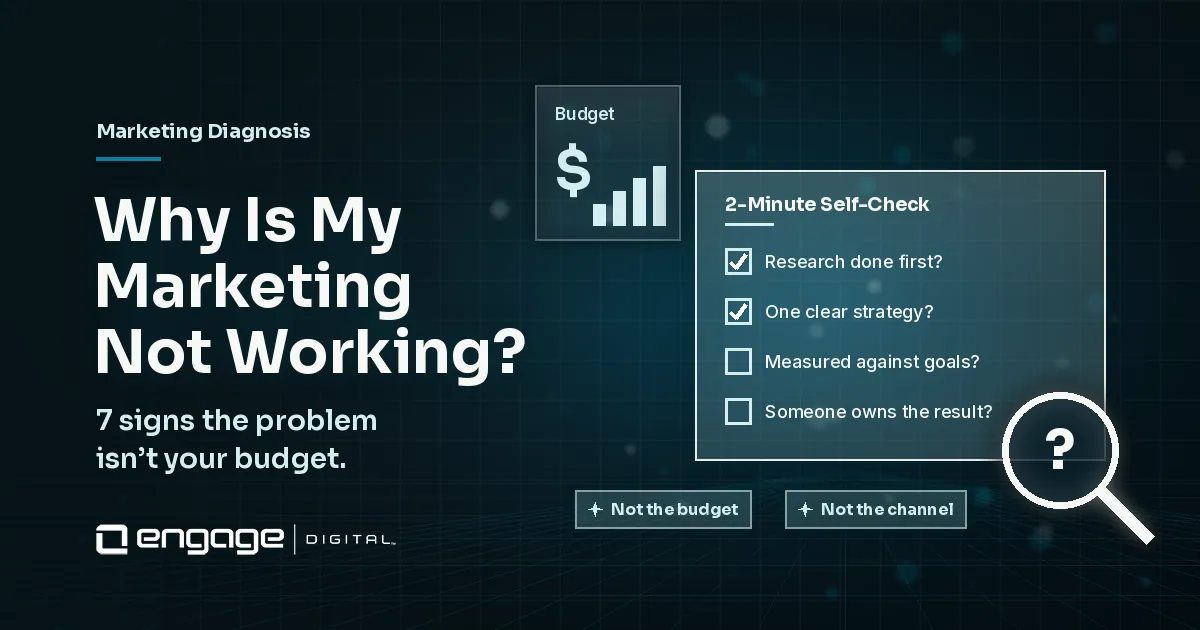
A Quick Self-Check
Take five minutes with this. Be honest. Nobody's grading it.
- Can we name the one outcome our marketing has to produce this year, in a number we can track?
- Does everyone touching our marketing, including any agency, know that outcome?
- Can we say, in one sentence, why a customer picks us over the alternatives?
- Did that sentence come from what customers actually told us, or from what we believe about ourselves?
- Does every report we get connect back to the outcome, or just to activity?
- If we quietly stopped one thing in our marketing, would our results show it?
If you answered "no" or "not really" to two or more, you're not alone. That's most of the people we talk to. And it's fixable.
Why Spending More Won't Close the Gap
When marketing isn't working, the natural move is to spend more. More ads, a bigger retainer, another tool. I understand the instinct. But if the what and the why aren't clear, a bigger budget just scales the confusion. You get more activity pointed at nothing in particular.
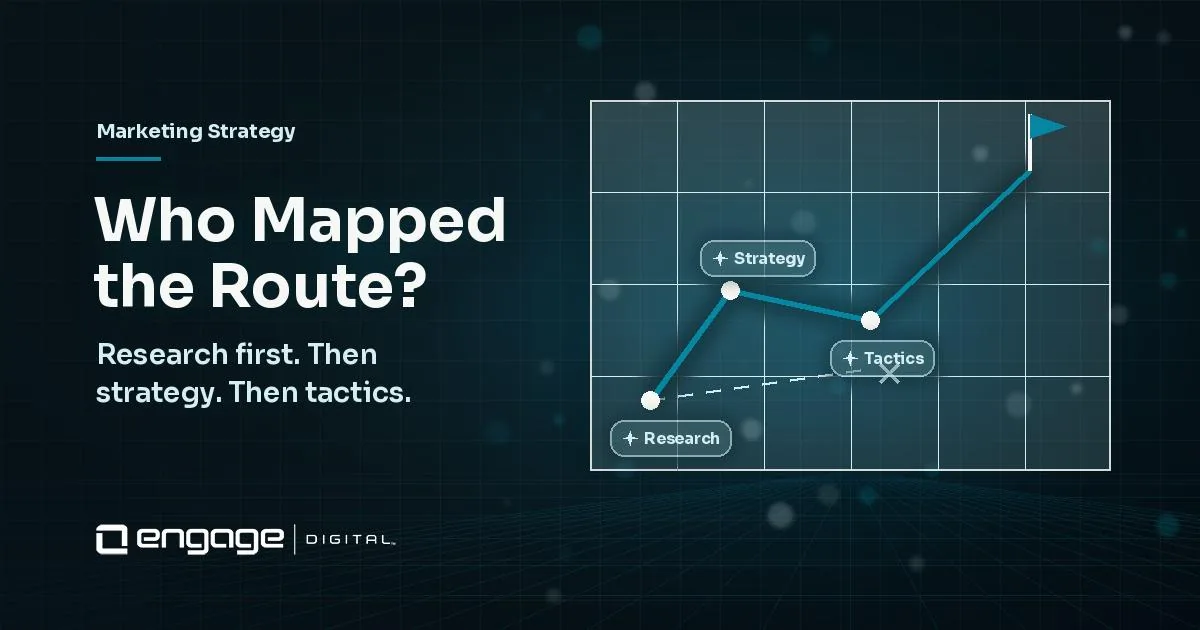
The fix comes from earlier work. It starts with research: who your buyers really are, what they want, and what makes them choose. And I'm not talking about the common answer of "everyone" or a general description of some fictitious non-existent demographic. It's incredibly specific down to personas and names of those personas with the detail of who they are as individuals whether they're married or not, where they spend their time, and what keeps them up at night. Then you turn that into a strategy built around them, their interests, needs and wants, and your business outcome "what" in mind. Then, and only then, you pick the tactics.
That's the order a marketing strategy should follow. Most businesses run it backwards.
More spend alone won't fix it. Research forged into a real strategy with results as the goal WILL.
What Happened When We Did It Ourselves
A few years back, we decided to test this on ourselves. We launched our own brand as a wholly owned subsidiary and did for it exactly what we do for our clients. We wanted to understand the cost of the friction clients put into their own marketing, and what happens when it's removed: no inexperienced input slowing things down, and full control of the output, meaning operations.
We started a home improvement brand from zero. Over three years, it came to dominate the six counties around its home base, out-executing competitors who'd been in the space for decades.
We closed the experiment a little short of four years in, and it was a success. We took that brand from zero to profitable in a few years. Not because we outspent anyone, but because we knew our what and we knew our why. We built the company around those answers, and built its digital presence with a clear objective: expand the brand's exposure, be where our target customers spend their time, respond immediately to every question or quote request, and remove all friction from their experience.
It's never about price alone. Customers want a frictionless experience that addresses their needs and delivers what it promises. That's the magic of adding the how to the what and the why: knowledge, experience and the right tools to execute it.
Where This Goes Next
I've been thinking on and talking about this problem for a long time. It's where Engage Digital starts: we're building an AI-powered marketing department, powered by the Engage AI marketing platform, around these two questions. It's coming early 2027.
If you want to know when it's ready, and get the thinking behind it along the way, sign up in the form below.
Engage is an AI-powered marketing department, powered by the Engage AI marketing platform. It's coming early 2027.
Join the waitlist for progress updates as we build and the launch date as soon as we set it.