Most marketing plans we're asked to look at start in the same place. A list of tactics. Post more on social. Run some ads. Redo the website. Start an email newsletter.
None of those are bad ideas. But a list of tactics isn't a strategy, and in our experience, the order in which a business makes its marketing decisions has more to do with results than any single tactic on the list.
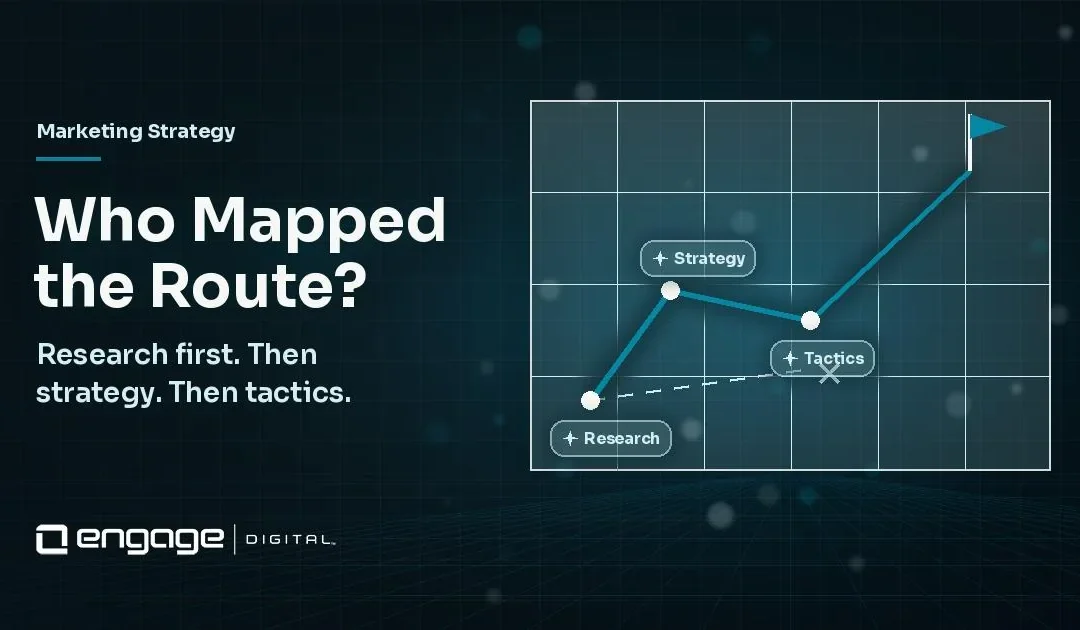
That order is research first, then strategy, then tactics. If you've been following our CEO, Robert Caruso's series, you've seen this idea before. In Know Your What, Know Your Why, he described the order a marketing strategy should follow and noted that many businesses run it backwards. This piece looks at the order itself, and at the part the data can't do for you.
What Each Stage Answers
Each stage answers a different question, and each one depends on the answer before it.
Research: Who Buys, and Why
Research tells you who your buyers really are, what problem they're trying to solve, who else they're considering and where you stand today. That last part matters more than most leaders expect. An honest look at your current website, search visibility, reviews and reputation often shows what's actually holding the business back before anyone suggests a fix.
Strategy: Where to Compete, and What to Say
Strategy takes what research found, makes choices and sets priorities on action. Which buyers to focus on. What outcome the marketing has to produce and what layers of activity connect and contribute to it. What message gives people a reason to choose you. Which problems get fixed first, ranked by what's most likely to move the business.
Tactics: How to Get There
Tactics are the channels, deliverables and the work: the posts, ads, pages and emails. When they come last, every one of them has a job, and you can tell whether it's doing that job.
What Skipping a Step Costs
When research is skipped, the strategy is built on assumptions. When strategy is skipped, tactics have nothing to point at. Either way, the cost shows up as spend that keeps going out while results stay flat.
The industry data lines up with what we've seen. In the Content Marketing Institute's 2025 B2B benchmarks, marketers who rated their strategy moderately effective or worse were asked why. Forty-two percent cited a lack of clear goals. Thirty-five percent said their strategy wasn't data-driven, and 29 percent pointed to ineffective audience research. Those are skipped steps, described by the people living with them.
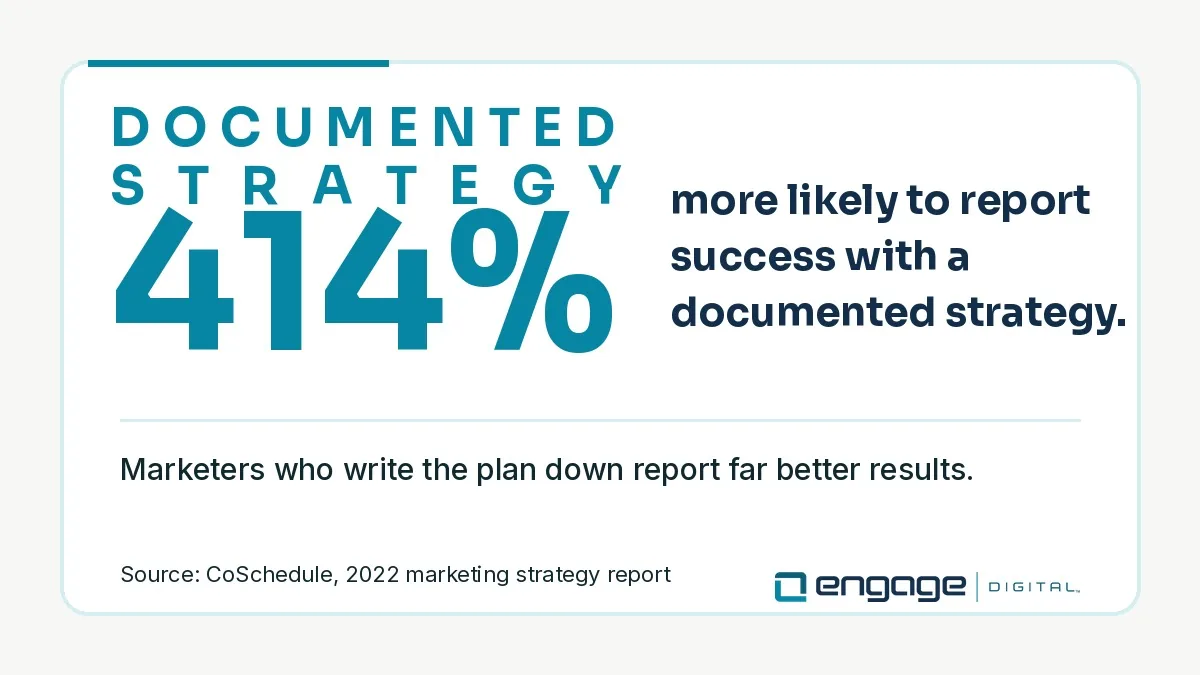
Documenting the plan clearly matters as well. In CoSchedule's 2022 marketing strategy report, marketers who documented their strategy were 414 percent more likely to report success, by their own assessment. Yet almost 40 percent said they had no documented strategy at all.
Did that sink in? 414%!
Refining the Strategy Is Where Improvement Comes From
One finding stands out. In CMI's 2026 B2B trends report, among marketers whose strategy improved over the year, 74 percent credited strategy refinement. Only 16 percent credited budget adjustments.
That's a strong case for the order. It also raises the harder question: refine it how?
Knowing that refinement works doesn't tell you what to refine. Knowing a new tactic doesn't either. And research, as valuable as it is, can show you that something isn't working without telling you which change will fix it. A drop in leads might be a targeting problem, a message problem, a website problem or a timing problem. The data points at the symptom. Deciding what to change, and how, is a judgment call driven by experience, or at least should be.
In our experience, that judgment comes from having seen the pattern before. Experienced marketers have watched a message miss with one audience and land with another. They've seen a strong campaign fail because of a weak landing page, and a modest one succeed because it reached the right people at the right moment. They know which levers tend to move results and which ones just create activity.
"A map for your trip is how you get there and what you do on the way. The destination is the goal and objective for that trip. Now overlay that on your marketing." Robert Caruso, Engage Digital CEO and co-founder
Research draws the map. The outcome you agreed on is the destination. Experience is what reads the road and decides when to change the route. Research informs; experience guides what to change.
That's also why a good strategy is rarely ever finished. It gets checked against the outcome constantly, and the tactics are adjusted to keep it pointed. Leadership sets the destination and makes the final calls. The people with the experience decide which turns to take.
A Quick Self-Check
Run your current marketing through these before you approve the next tactic.
- Can you describe who buys from you, and why, based on what customers have actually told you? We're talking about the deep dive details of who. If you answer yes here, you would have the detailed, multi-sentence description of that buyer. If you don't, it's a no.
- Do you have an honest picture of where your marketing stands today, including what's holding it back?
- Is your strategy written down, with one outcome it has to produce and the connected outcomes that drive up to that one?
- Can you explain why each tactic you're running was chosen, and what it's supposed to do?
- When something isn't working, does someone with real experience decide what to change, or does the plan change based on a hunch or company leadership demands?
- Is your strategy reviewed against results on a regular, frequent schedule, not just when something breaks?
If a few of those were hard to answer, the order is a good place to start. Fixing it rarely takes a bigger budget. It takes doing the steps in sequence, and putting experience in charge of the changes.
The Standard We're Building Toward
We think every business deserves marketing that starts with research done correctly, is guided by a real strategy, and is continuously adjusted on the fly by experience until it reaches the outcome. That's the standard we're holding ourselves to, and early 2027 is when you'll see what it looks like.
If you'd like to be among the first to hear when it arrives, and get practical thinking like this along the way, join the list below.