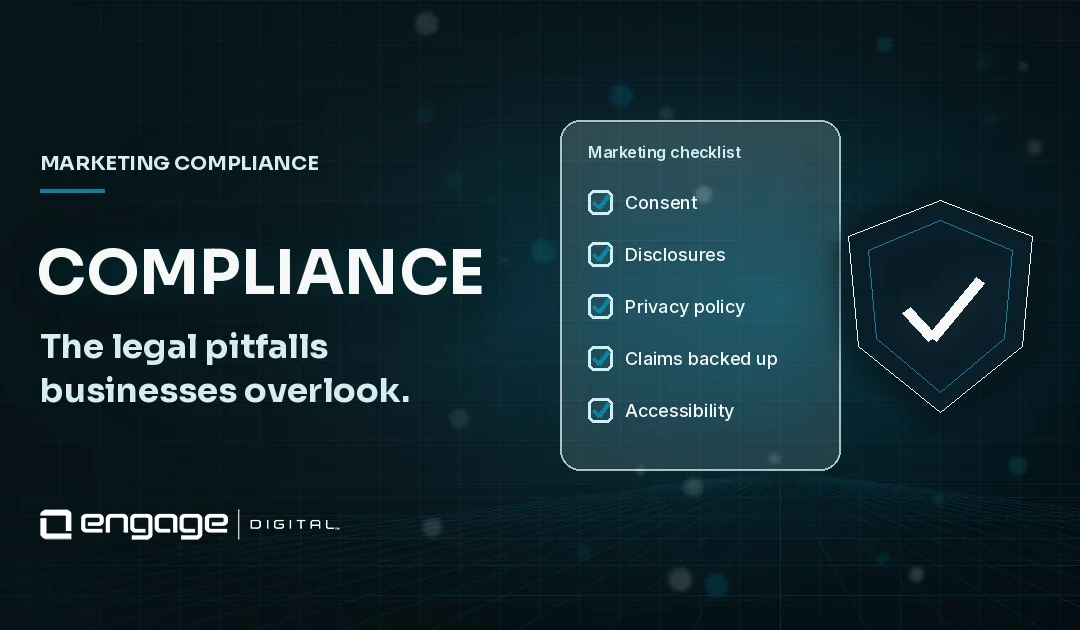
The legal pitfalls businesses miss most are using reviews without permission, unsupported claims, misrepresenting typical results, data privacy, spam rules, undisclosed endorsements, accessibility, retargeting privacy and unchecked AI content. Each one can bring fines and damage your reputation.
Businesses that ignore digital marketing regulations can face fines large enough to put them out of business. As digital marketing practices continue to expand and evolve, companies are increasingly at risk of non-compliance. These penalties can come unexpectedly, leaving businesses in financial jeopardy. While the Federal Trade Commission (FTC) can’t go after every business, those targeted often face penalties that can devastate their operations and damage their reputation.
With the rapid growth of digital marketing, companies often focus heavily on creativity and engagement, but they frequently neglect the equally important legal and compliance aspects. Failing to prioritize legal regulations can lead to legal battles, lost revenue, and long-term reputational harm. As businesses continue to innovate in their marketing strategies, it is important to balance creativity with compliance to avoid significant financial risks.
Many companies inadvertently fall into legal pitfalls when promoting their products or services online, from mishandling customer reviews to failing to substantiate marketing claims. This post covers the legal issues businesses miss most often in digital marketing, so you can stay compliant and protect your brand. By understanding and addressing these issues, businesses can confidently grow their digital marketing efforts while avoiding the costly consequences of non-compliance.
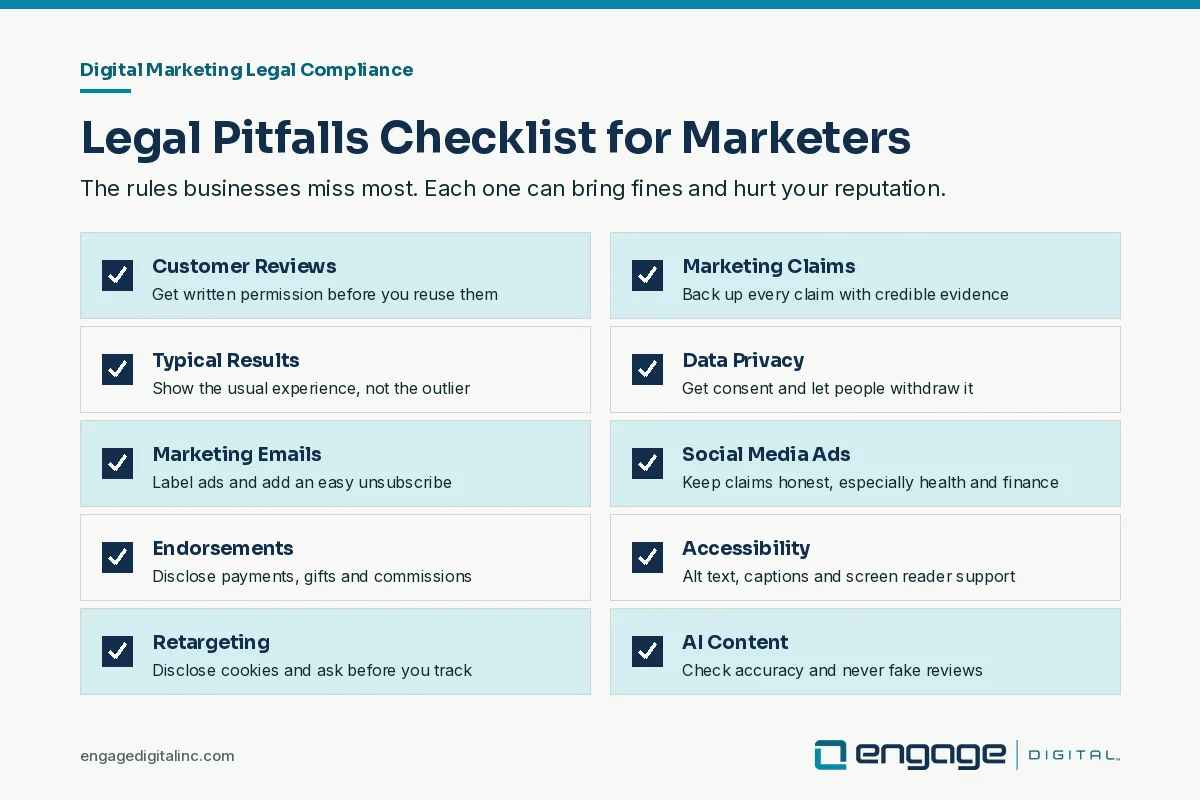
1. Using Customer Reviews Without Permission
One of the most common legal mistakes businesses make in digital marketing is using customer reviews without obtaining written permission. Many businesses pull reviews directly from platforms like Google and repurpose them on their websites or social media pages. While it may seem harmless, using reviews without consent can lead to legal issues, especially if the review contains misleading information or the customer did not intend to allow their feedback to be publicly shared. This is particularly problematic if a review is taken out of context or edited in a way that misrepresents the customer’s true opinion. Repurposing reviews without explicit written consent may also violate Google’s Terms of Service, which prohibits Google from using customer reviews in any manner that could be misleading or misrepresentative.
The Federal Trade Commission (FTC) has strict guidelines on endorsements and testimonials. According to the FTC’s rules, businesses must have the customer’s explicit written consent to use the customer’s name for advertising. These guidelines protect consumers from misleading advertising practices and ensure that the review accurately represents the customer’s experience. Customer testimonials must reflect honest opinions and experiences, not edited or fabricated claims designed to exaggerate product benefits.
In addition, businesses must be transparent about their relationships with customers providing testimonials. For example, if a business offers an incentive, such as a discount or free product, in exchange for a review, it must be disclosed. The failure to disclose these relationships or misrepresenting a customer’s experience can lead to legal repercussions for the customer, including fines and penalties from the FTC. To avoid these issues, businesses should always secure explicit written consent, avoid altering reviews, and be transparent about collecting and using customer feedback.
2. Substantiating Claims in Marketing Materials
Another common issue is failing to substantiate ads or promotional content claims. If you’re making specific claims about a product’s effectiveness, savings, or impact on users, those claims must be substantiated with credible evidence. Businesses must back up every assertion with data that can be verified and sourced. Failing to do so, particularly in highly regulated industries like health, financial services, or technology, can open businesses to legal action, regulatory scrutiny, and costly penalties.
The FTC has warned companies that promote products without providing evidence to support their claims. For example, claiming your service guarantees 50% growth in one month without credible proof could attract regulatory scrutiny. To ensure credibility, always back up your claims with case studies, research data, or third-party reviews. In addition, providing consumers with clear, factual evidence is key to building trust and compliance in your brand.
3. The “Mean Experience” Rule
The “mean experience” rule is a marketing guideline that prevents businesses from misrepresenting the typical consumer experience. It dictates that businesses must avoid promoting exaggerated or extreme results not representative of the average customer. For example, highlighting a customer who lost 20 pounds in a month could mislead potential buyers if most customers experience more gradual results. This rule ensures that all advertising claims, especially those based on customer testimonials, are clear and accurate.
This rule is designed to protect consumers from deceptive marketing practices that could lead them to make decisions based on unrealistic expectations. The Federal Trade Commission (FTC) requires that businesses ensure any testimonial or endorsement accurately reflects the typical experience of most customers. If a company emphasizes one extreme result, it must disclose that it is not the common experience or may face penalties.
The “mean experience” rule helps create a level playing field, where consumers are not misled by marketing tactics that use outlier success stories to drive sales. This promotes transparency and builds trust between businesses and consumers. By adhering to this rule, businesses can stay compliant with the law while building a long-term, positive relationship with their customers.
4. Data Privacy and Compliance in Digital Marketing
One of the most important parts of digital marketing is data privacy compliance. Regulations like GDPR and CCPA play vital roles in businesses collecting, storing, and using consumer data. Non-compliance can bring severe fines. These fines highlight the importance of proactively adhering to privacy laws to avoid potentially catastrophic financial and reputational damage.
Businesses must obtain explicit consent from customers before collecting and using their data. Transparency is key: Companies should communicate why the data is being collected and how it will be used. Easy ways must also be available for customers to withdraw consent or request data deletion anytime, so consumers keep control over their personal information.
Fines for breaking data protection laws can be steep. This emphasizes the importance of prioritizing privacy to protect customers and the business.
5. The Risk of Unsolicited Marketing Emails
Under the CAN-SPAM Act, businesses don’t need opt-in consent before sending promotional emails, but every commercial email has to follow a few basic rules. The header information, including the “From” name and email address, must be accurate and show who sent the message. The subject line can’t mislead people about what the email contains. The email must also include your valid physical postal address.
The CAN-SPAM Act also requires that promotional emails be clearly identified as ads. Each one needs a clear, working way to unsubscribe, and businesses must honor opt-out requests promptly. Asking people to opt in is still good practice for trust and deliverability, even though CAN-SPAM doesn’t require it. Failing to follow these rules can result in hefty fines, legal action, and damage to a company’s reputation. Therefore, businesses should be vigilant and ensure all email marketing efforts comply with the CAN-SPAM Act.
6. Misleading Claims in Social Media Advertising
Many businesses post promotional content on social media without fully understanding the legal requirements surrounding endorsements and sponsorships. According to the Federal Trade Commission (FTC), influencers or individuals promoting products must disclose any material connections they have with the brand. This includes payments, gifts, affiliate commissions, or other incentives provided in exchange for promotion. Failure to disclose these connections can lead to penalties and undermine consumer trust in the brand’s authenticity.
Misleading claims, particularly in financial services or health-related products, can result in severe penalties for businesses. The FTC is particularly vigilant in these industries because consumers are vulnerable to exaggerated or unsupported claims. Businesses must ensure that all endorsements, whether paid or organic, are clearly disclosed and comply with all FTC guidelines. Otherwise, they risk legal action, fines, and reputational damage that could hurt their long-term growth.
7. Failing to Follow the FTC’s “Disclosure Guidelines”
When engaging influencers or affiliates, businesses must adhere to the Federal Trade Commission (FTC) guidelines for disclosures. These rules are designed to ensure transparency and protect consumers from misleading or deceptive marketing practices. The guidelines require that businesses disclose any material relationships with influencers, including payments, gifts, or affiliate commissions. This ensures that consumers are fully informed when they see promotional content and can make decisions based on accurate, transparent information.
Failure to provide these disclosures can mislead consumers and result in violating laws. The FTC takes these violations seriously, especially when they involve deceptive marketing tactics that affect purchasing decisions. Non-compliance with these disclosure requirements can lead to fines, legal action, and reputational harm. Businesses must stay up-to-date on these rules to maintain trust with their audience and avoid potential legal consequences.
8. Accessibility Compliance in Digital Marketing
Businesses must prioritize accessibility compliance in digital marketing to meet Americans with Disabilities Act (ADA) standards. Websites and digital ads must be fully accessible to individuals with disabilities, ensuring equal access to online content. This includes compatibility with screen readers, providing alternative text for images, and ensuring that videos are subtitled for those with hearing impairments. By meeting these standards, businesses promote inclusivity and ensure they remain compliant with federal regulations.
Failing to meet accessibility requirements can expose businesses to potential lawsuits and legal action. Consumers with disabilities have the right to access information and services online, and businesses that neglect accessibility can face costly consequences. In addition to the legal risks, inaccessible businesses miss out on a significant portion of the market. By prioritizing digital accessibility, companies create a more inclusive and welcoming experience for all customers while avoiding the risk of non-compliance penalties.
9. Retargeting Ads and Consumer Privacy
Retargeting ads are a powerful tool for businesses looking to re-engage visitors who have shown interest in their products or services. However, they also raise potential privacy issues. Disclose the use of cookies and tracking technologies to users so they are fully informed about how their data is being collected and used. Disclosure builds trust and keeps you transparent.
In many GDPR-compliant countries, businesses are required to obtain explicit consent before tracking users for retargeting campaigns. This means that before any cookies or tracking tools are used, businesses must ask for permission from the user. Not adhering to these privacy regulations can lead to hefty fines and reputational damage. Therefore, businesses must make users aware of how their data is being used and ensure compliance with privacy laws to avoid legal repercussions.
10. Using AI and Automating Content Creation
AI-driven content tools can speed up marketing and help businesses scale their efforts quickly. However, companies must use these tools responsibly and comply with advertising laws. For example, the FTC has warned that businesses using AI to generate fake reviews or testimonials may be in violation of marketing regulations. Misleading consumers with fabricated content can lead to serious legal consequences.
As AI continues to evolve, businesses must stay informed about new regulations and guidelines, especially as more laws related to AI-generated content are expected to emerge. All AI-generated content must be accurate, transparent, and compliant with current marketing standards. Companies should prioritize ethical AI use to build trust with their audience and avoid legal risks, ensuring their content adheres to both existing and future regulations.
Staying Legal in Digital Marketing
Digital marketing moves fast, but you still have to follow the rules or pay for it. Understanding the legal implications of things like customer reviews, data privacy, and advertising claims is critical for maintaining a strong reputation and protecting your bottom line.
Building legal compliance into your digital marketing isn’t only about avoiding penalties. It also builds trust and credibility with your audience. By being transparent, following best practices, and ensuring that all claims and testimonials are substantiated, businesses can create responsible and effective marketing campaigns that stand the test of time. Stay informed, stay compliant, and keep growing.
Frequently Asked Questions
Can I Use Customer Reviews in My Marketing?
Get written permission first. Using reviews without it is a common legal mistake.
What Is the Mean Experience Rule?
Ads that show results must reflect what a typical customer can expect, not the best case.
Do Influencers Have to Disclose Paid Posts?
Yes. The FTC requires clear disclosure of sponsorships and endorsements.
Does Website Accessibility Matter Legally?
Yes. Digital marketing should meet Americans with Disabilities Act (ADA) standards.